The 3rd International Symposium on Software Fault Prevention, Verification, and Validation


30 November ~ 1 December 2026 - Matsuyama, Ehime, Japan

Welcome to the website of the 3rd International Symposium on Software Fault Prevention, Verification, and Validation (SFPVV2026)

Software fault prevention, verification, and validation are essential and important approaches to ensuring software productivity, reliability, and qualities. Fault prevention focuses on the issues of how to prevent the introduction and occurrence of faults in software systems. Verification is a means to rigorously check whether software systems satisfy their specification or properties. Validation refers to the technologies and activities for confirming whether the behavior and performance of software systems satisfy the user’s requirements. Various techniques and supporting tools have been developed to fulfill the tasks of software fault prevention, verification, and validation, but many difficulties and open problems remain unaddressed.

This symposium aims to invite researchers and practitioners working on software quality assurance to exchange ideas and to discuss how formal approaches, testing-based approaches, AI approaches, and their combinations can be studied, established, and supported to fulfill the goals of fault prevention, verification, and validation. All people who are interested in the topics mentioned above are welcome to submit papers and to participate in the symposium.

Accepted Papers and Presentations

Regular Paper Track: 15 papers · Presentation Track: 8 presentations

The Tentative Program is now available.

View accepted papers and presentations

Scope and Topics

Authors are invited to submit technical papers describing original and unpublished work on, but not limited to, the following topics:

  • Specification and Prototyping
  • Specification and Testing
  • Refinement and Evolution
  • Formal Verification and Review
  • Testing-Based Formal Verification
  • Bug Prediction and Reliability
  • Modeling
  • AI and Specification
  • AI and Code Generation
  • AI and Testing
  • AI and Verification
  • Human-Machine Pair Programming
  • Human-Machine Pair Review
  • Supporting Tools
  • Case studies
  • Application experience

Registration

Please contact Dr. Junjun Zheng by email at jzheng@hiroshima-u.ac.jp regarding any issues in relation to registration and payment as well as invitation letter for visa application (if applicable).

1.Each accepted paper for SFPVV2026 symposium must have at least one author registered for SFPVV2026 in the category of Author Registration by the indicated due date. This policy applies to each accepted paper, NOT each author.

2.All the registrations and payments should be made using the online registration system provided in the SFPVV2026 homepage. The online registration supports Credit Card payment only. Not expected, but just in case that the online registration and payment cannot be made for a good reason, other means for payment (wire-transfer, cheque, online-transfer and so on) can be considered. In that case, please contact Dr. Junjun Zheng by email (jzheng@hiroshima-u.ac.jp) as early as possible. Registration can be considered completed only after the full payment has been received.

3.All the fees and payments are in Japanese yen (JPY).

4.Registration cancelation policy: Registration fees will be refunded only if the cancellation request is submitted in writing by email with a good reason and no later than 8 November 2026. Cancellations will be subject to a cancellation fee to cover administrative charges. No refunds will be issued for cancellation requests received after 8 November 2026.


The registration fees for SFPVV2026 are listed below.

Registration Type Early
(Due: 8 November 2026)
Late
(After 8 November 2026)
Regular JPY 50,000 JPY 60,000
Student JPY 40,000 JPY 50,000

Registration Procedure

Please complete the SFPVV2026 Registration Form using the link below. After reviewing your registration, the Organizing Committee will send you a confirmation email with your registration number, registration fee, and payment instructions.

Registration Form

Tentative Schedule

All times are Japan Standard Time (JST, UTC+9). This schedule is tentative and subject to change.

Date and Time Event / Venue

Registration Desk Open

Reception
Venue: DOGOICHIE

Day 1: Keynotes & Sessions
(Paper and Presentation Tracks)
Registration Desk: 09:00–16:30

Banquet
Venue: ANA CROWNE PLAZA Matsuyama

Day 2: Sessions
(Paper and Presentation Tracks)
Registration Desk: 09:00–15:40

View the detailed Tentative Program

From Ehime University to Dogo, allow approximately 30 minutes on foot or 10 minutes by tram.

Notes

  1. The early or late registration fee is determined by the date on which the registration form is submitted.
  2. Student registration is available only to participants with valid student status.
  3. Each accepted paper must have at least one author fully registered for the paper to be included in the conference program and proceedings.
  4. The registration fee includes access to all SFPVV2026 sessions, the conference proceedings, and conference events.

Venue

The 3rd International Symposium on Software Fault Prevention, Verification, and Validation (SFPVV 2026) will take place at the Center for Information Technology, Ehime University (CITE). CITE is on the university's Johoku Campus, which is on the north side of Matsuyama Castle, within walking distance of central Matsuyama.

CITE is one of the key departments of the Institute for Development of Digital Human Resources (IDDHR). CITE supports information technology education and academic research activities in Ehime University by managing the university's information infrastructure and network security.

Center for Information Technology, Ehime University
Map of the Johoku Campus area at Ehime University

Accommodation

Distance
Hotel Vista Matsuyama 19 minutes on foot (1.4 km) / 7 minutes by car
Candeo Hotels Matsuyama Okaido 18 minutes on foot (1.3 km) / 6 minutes by car
Dormy Inn Matsuyama Natural Hot Spring 22 minutes on foot (1.5 km) / 7 minutes by car
Daiwa Roynet Hotel Matsuyama 18 minutes on foot (1.3 km) / 6 minutes by car
Toyoko-INN Matsuyama Ichibancho 19 minutes on foot (1.4 km) / 6 minutes by car
ANA Crowne Plaza Matsuyama by IHG 20 minutes on foot (1.4 km) / 7 minutes by car

Tentative Program

All times are Japan Standard Time (JST, UTC+9). This program is tentative and subject to change.

Presentation times, including questions and discussion: Full Paper 25 minutes; Short Paper 20 minutes; Presentation Track 15 minutes.

Sunday, November 29, 2026 — Tentative Program
Time (JST)Program / Presentations
–

Registration Desk Open

Venue: Seminor Room 1

–

Reception

Venue: DOGO ICHIE

Monday, November 30, 2026 — Tentative Program
Time (JST)Program / Presentations
–

Registration Desk Open

Venue: Meeting Room

–

Opening

Venue: Media Hall

–

Keynote Speech 1

Chair: TBA

  • Keynote

    Title: TBA

    Prof. Zhiming Liu

    Southwest University, Chongqing, China

–

Coffee Break

Venue: Meeting Room

–

Session 1: Requirements and Specification Quality

Chair: TBA · Venue: Media Hall

  • Full Paper · No. 2

    Layered Semi-Formal Specifications for Repository-Level Code Generation

    Yuxiang Shang and Shaoying Liu

    Hiroshima University, Japan
    East China Normal University, China

  • Short Paper · No. 6

    Ambiguity Detection Method for Requirements Specification using Contextual Information

    Risa Ishii, Motoshi Saeki and Atsushi Sawada

    Nanzan University, Japan
    Kansai University of International Studies, Japan

  • Presentation Track · No. 39

    Feasibility Evaluation of Unreasonable Requirements Detection in RFPs Using LLMs

    Ryota Mizutani, Hayato Maruta, Yukasa Murakami, Masateru Tsunoda and Akito Monden

    Kindai University, Japan
    Okayama University, Japan

–

Break

Venue: Meeting Room

–

Session 2: Reliability and Security

Chair: TBA · Venue: Media Hall

  • Full Paper · No. 26

    Failure-Epoch Probabilistic Rewriting Semantics for Dynamic Fault Trees

    Jiani Dai, Junjun Zheng, Hiroyuki Okamura, Tadashi Dohi, Yepeng Ding and Shaoying Liu

    Hiroshima University, Japan
    East China Normal University, China

  • Short Paper · No. 23

    Modeling and Reliability Analysis of V2V Communications under DoS Attacks

    Junjun Zheng, Hiroyuki Okamura, Wei Li and Tadashi Dohi

    Hiroshima University, Japan

  • Presentation Track · No. 36

    Impact of EVM Bytecode Obfuscation on Vulnerability Detection

    Koshiro Shimamoto, Chihiro Kado and Tatsuhiro Tsuchiya

    The University of Osaka, Japan

–

Lunch Break

Venue: Seminor Room 2

–

Session 3: Formal Methods

Chair: TBA · Venue: Media Hall

  • Full Paper · No. 1

    Operational Semantics of Recursive Quantum Programs

    Canh Minh Do and Kazuhiro Ogata

    Japan Advanced Institute of Science and Technology, Japan

  • Full Paper · No. 15

    Efficient Formal Verification of Measurement-Based Quantum Computation by Branch Reduction Based on Structural Checking

    Ryuichi Nagoshi and Tsubasa Takagi

    Japan Advanced Institute of Science and Technology, Japan

  • Short Paper · No. 32

    Formal Verification of Spiral and Windmill Routing for Image-Processing Networks-on-Chip

    Shotaro Nagaoka, Tomoyuki Yokogawa and Masafumi Kondo

    Okayama Prefectural University, Japan
    Okayama University of Science, Japan

  • Presentation Track · No. 19

    Model Checking Complex Branching Scenarios in Strategy Games

    Toma Nose, Tomoyuki Yokogawa and Sousuke Amasaki

    Okayama Prefectural University, Japan
    Nanzan University, Japan

–

Coffee Break

Venue: Meeting Room

–

Keynote Speech 2

Chair: TBA · Venue: Media Hall

  • Keynote

    Old Recipes Still Work in the Age of AI

    Prof. Tatsuhiro Tsuchiya

    The University of Osaka, Japan

–

Banquet

Venue: ANA CROWNE PLAZA Matsuyama

Tuesday, December 1, 2026 — Tentative Program
Time (JST)Program / Presentations
–

Registration Desk Open

Venue: Meeting Room

–

Session 4: Automated Software Engineering

Chair: TBA · Venue: Media Hall

  • Full Paper · No. 8

    An Automated Approach to Lemma Discovery in the OTS/CafeOBJ Method

    Phuong Thu Nguyen, Canh Minh Do and Kazuhiro Ogata

    Japan Advanced Institute of Science and Technology, Japan

  • Full Paper · No. 34

    Establishing Behavioral Baselines from LLM-Generated Oracle-Free Probes

    Kinari Nishiura and Osamu Mizuno

    Kyoto Institute of Technology, Japan

  • Presentation Track · No. 37

    Knowledge-Graph-Based Retrieval-Augmented Code Generation for Private Libraries

    Kotaro Akasaka and Shingo Takada

    Keio University, Japan

–

Coffee Break

Venue: Meeting Room

–

Session 5: Machine Learning and Security

Chair: TBA · Venue: Media Hall

  • Full Paper · No. 12

    Exploiting Discrete Structures for Constrained Adversarial Attacks on Tree Ensembles

    Takumi Kubo, Takahisa Toda and Hisashi Koga

    University of Electro-Communications, Japan

  • Full Paper · No. 28

    Exploring the Interaction between Machine Learning Algorithms and Oversampling Algorithms in Software Bug Prediction

    Youmeng He, Tadashi Dohi, Jingchi Wu, Junjun Zheng and Hiroyuki Okamura

    Hiroshima University, Japan

  • Presentation Track · No. 25

    Context-aware Vulnerability Prioritization: A Systematic Literature Review of Severity Scoring, Exploit Prediction and Decision Support Gaps

    Samodi Fernando and Hideto Ogasawara

    Chiba Institute of Technology, Japan

  • Presentation Track · No. 40

    Revisiting the Effects of Identifier Normalization and Fine-Tuning on Vulnerability Detection: The Role of Code Formatting

    Sousuke Amasaki and Tomoyuki Yokogawa

    Nanzan University, Japan
    Okayama Prefectural University, Japan

–

Lunch Break

Venue: Seminor Room 2

–

Session 6: Dependability Modeling and Analysis

Chair: TBA · Venue: Media Hall

  • Full Paper · No. 21

    pysrat: A Python Package for Metrics-Based Software Reliability Growth Models

    Hiroyuki Okamura, Junjun Zheng and Tadashi Dohi

    Hiroshima University, Japan

  • Full Paper · No. 24

    Adjoint-Based Gradient Computation for Non-Homogeneous Markov Process Software Reliability Models with Grouped Failure Data

    Kaixuan Tao, Hiroyuki Okamura, Junjun Zheng and Tadashi Dohi

    Hiroshima University, Japan

  • Presentation Track · No. 35

    Modelling and Formalization of a Braking System in IEEE 1474-2025

    Hisashi Mori, Shutaro Ouchi, Yuta Wada, Masaaki Takeyasu and Florian Faissole

    Mitsubishi Electric Corp., Japan
    Mitsubishi Electric R&D Centre Europe, France

  • Presentation Track · No. 38

    Diagnosing Interacting Uncertainty in a Neuroadaptive Loop

    Seungil Yang

    Japan Advanced Institute of Science and Technology, Japan

–

Coffee Break

Venue: Seminor Room 2

–

Session 7: Software Reliability Modeling and Prediction

Chair: TBA · Venue: Media Hall

  • Full Paper · No. 29

    Generalized Information Criteria for NHPP-Based Software Reliability Models with Least Squares Estimation

    Jingchi Wu, Tadashi Dohi, Junjun Zheng and Hiroyuki Okamura

    Hiroshima University, Japan

  • Full Paper · No. 31

    New Insights into Software Fault-Count Prediction: Beyond Classical Plug-in Prediction

    Jingchi Wu, Tadashi Dohi, Junjun Zheng and Hiroyuki Okamura

    Hiroshima University, Japan

–

Closing

Venue: Media Hall

Keynote Speakers

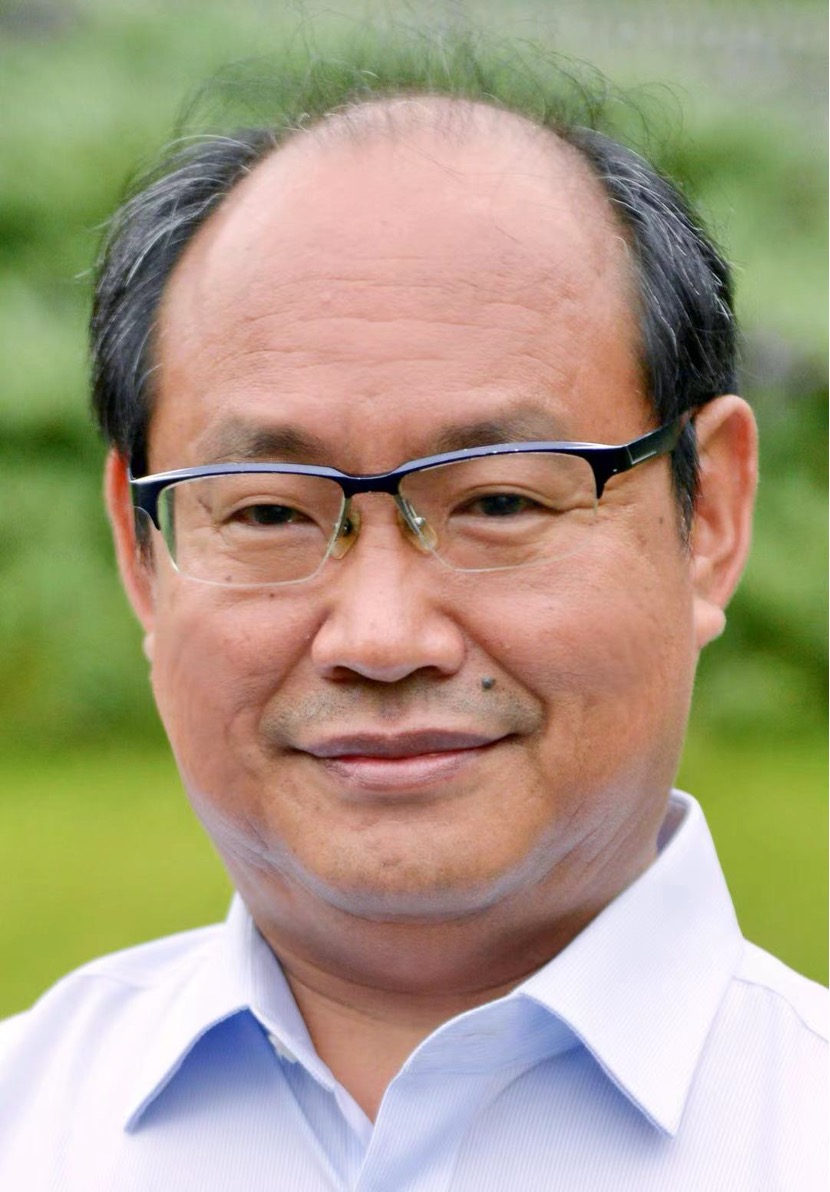
Tatsuhiro Tsuchiya

Tatsuhiro Tsuchiya is a Professor at the Graduate School of Information Science and Technology, The University of Osaka, where he leads the Dependability Engineering Laboratory. He received his M.E. and Ph.D. degrees from the University of Osaka in 1995 and 1998, respectively. His research interests include techniques for building reliable and high-quality computing systems, such as software testing, model checking, and fault tolerance. He has served as Program Co-Chair for the 21st IEEE Pacific Rim International Symposium on Dependable Computing (PRDC 2015), the 17th IEEE International Conference on Dependable, Autonomic and Secure Computing (DASC 2019), the 13th International Workshop on Combinatorial Testing (IWCT 2024), and the 8th IEEE International Conference on Artificial Intelligence Testing (AITest 2026).

Title: Old Recipes Still Work in the Age of AI

Abstract: AI has transformed software engineering, but it is not a panacea for every problem. In this talk, I will share several challenges I have encountered in practice and discuss how traditional approaches can still provide effective solutions. First, I will examine how existing specifications can be structured to be both human-readable and machine-readable. Next, I will discuss the use of AI for specification review and show how a traditional technique remains valuable even in this new context. As a third example, I will touch on test case generation and introduce our non-AI-based approach. Finally, I will briefly discuss how traditional approaches can be combined with AI-based methods to leverage the strengths of both.

Zhiming Liu

Zhiming Liu is a Professor at Southwest University, Chongqing, China. He received his master’s degree from the Institute of Software, Chinese Academy of Sciences, in 1988, and his PhD in Computer Science from the University of Warwick in 1991. Before joining Southwest University full-time in 2016, he held positions at the University of Warwick, the University of Leicester, and UNU-IIST in Macau. His research focuses on software theory and methods, trustworthy software systems, and, more recently, modelling and design methods for human-cyber-physical systems (HCPS). He is known for his work on model-transformation-based methods for fault-tolerant and real-time programming, probabilistic Duration Calculus, object-oriented program semantics and refinement, the rCOS model-driven software development method, and HCPS software architecture modelling and design. He was a founder of the international conferences ICTAC, FACS, and SETTA, and the spring school SETSS. He has served as chair or programme committee member for many conferences, including ATVA, APLAS, FM, ICTAC, SEFM, and VSTTE, and as guest editor for special issues of journals such as Formal Aspects of Computing, Science of Computer Programming, and Theoretical Computer Science.


Important Dates

Full/Regular Paper Track

  • Submission Deadline: 1 September 2026
  • Submission Deadline: 22 September 2026 (Extended)
  • Notification: 29 September 2026
  • Notification: 20 October 2026 (Updated)
  • Camera-ready: 20 October 2026
  • Camera-ready: 8 November 2026 (Updated)

Presentation Track

  • Submission Deadline: 15 September 2026
  • Submission Deadline: 6 October 2026 (Extended)
  • Notification: 8 October 2026
  • Notification: 20 October 2026 (Updated)

Submission and Publication

Two types of submissions are possible: presentation papers and regular papers. Both types of papers should be written in English. All papers should be submitted using the EasyChair link: here. Accepted presentation papers will not be included in the proceedings of the symposium; only the accepted regular papers will be included in the proceedings, which will be published in the Springer LNCS series. The details of the symposium can be found in the symposium homepage.

  • A regular paper must not have been published or be concurrently considered for publication elsewhere. Each regular paper should not exceed 18 pages (including references) in the Springer LNCS format.
  • A presentation paper is not required to report mature research results but expected to include new ideas or progress in ongoing research projects. Each presentation paper must provide a clear title and an extended abstract in 2 pages in the Springer LNCS format.

Sponsors

Supported by Hiroshima University

Institute for Development of Digital Human Resources, Ehime University

Multidisciplinary Digital Publishing Institute (MDPI)

Digital security illustration for the MDPI Software special issue

MDPI Software Special Issue

Software Reliability, Security and Quality Assurance

Learn more about the special issue in the MDPI journal Software.

View Special Issue

Technical Sponsors

Supported by IPSJ SIG Software Engineering

IEICE SIG Software Science

JSSST SIG Foundation of Software Engineering

SFPVV 2026 Awards

MDPI Software Best Paper Award and Best Presentation Award

At SFPVV 2026, we plan to present a Best Paper Award and a Best Presentation Award, sponsored by MDPI Software.

The Best Paper Award will recognize the technical quality and research contribution of a paper and will be selected from all regular papers accepted for the symposium. The Best Presentation Award will focus on the quality of the presentation itself—including its clarity, organization, effectiveness in communicating research ideas, and the presenter's interaction with the audience during the Q&A session—and will be selected from both regular papers and presentation papers.

The MDPI Best Paper Award and the Best Presentation Award will each carry a cash prize of JPY 50,000.

The Organizing Committee will select the winners of the Best Paper Award and the Best Presentation Award. The results will be announced during the Closing Session and posted on the symposium website. Each winner will receive a cash award.

We hope these awards will encourage authors to submit high-quality papers and presenters to deliver outstanding presentations, fostering greater interaction and discussion among all symposium participants.

Symposium Organizers

Steering Committee

Tadashi Dohi, Hiroshima University, Japan
Shaoying Liu (Chair), East China Normal University, China
Geguang Pu, East China Normal University, China
Tatsuhiro Tsuchiya, University of Osaka, Japan

General Chair

Tadashi Dohi, Hiroshima University, Japan


Program Chairs

Hirohisa Aman, Ehime University, Japan
Xi Wang, Shanghai University, China


Finance Chair

Junjun Zheng, Hiroshima University, Japan


Local Arrangement Chairs

Hiroshi Takahashi, Ehime University, Japan
Shozo Saeki, Ehime University, Japan


Web Master

Jingchi Wu, Hiroshima University, Japan


Program Committee

Yamine Ait Ameur, IRIT/INPT-ENSEEIHT, France
Sousuke Amasaki, Nanzan University, Japan
Yoonsik Cheon, University of Texas at El Paso, USA
Yujun Dai, Micron Technology
Mara Downing, University of California Santa Barbara, USA
Dingbang Fang, Fujian Normal University, China
Marc Frappier, Université de Sherbrooke, Canada
Sabine Glesner, Technical University of Berlin, Germany
Kiyoshi Honda, Osaka Institute of Technology, Japan
Rao Lei, Southwest Petroleum University, China
Jiandong Li, Peking University, China
Jingyue Li, Norwegian University of Science and Technology, Norway
Yang Li, Tianjin University, China
Chen-Kai Lin, Academia Sinica, Taiwan
Ai Liu, Nanjing University of Aeronautics and Astronautics, China
Osamu Mizuno, Kyoto Institute of Technology, Japan
Akito Monden, Okayama University, Japan
Hiroyuki Nakagawa, Okayama University, Japan
Shin Nakajima, National Institute of Informatics, Japan
Fumiko Nagoya, Nihon University, Japan
Hiroyuki Okamura, Hiroshima University, Japan
Jun Pang, University of Luxembourg, Luxembourg
Yuji Sato, Hosei University, Japan
Wuwei Shen, Western Michigan University, USA
Xinfeng Shu, Xi'an University of Posts and Telecommunications, China
Tatsuhiro Tsuchiya, University of Osaka, Japan
Masateru Tsunoda, Kindai University, Japan
Pingyan Wang, Guangdong University of Petrochemical Technology, China
Tomoyuki Yokogawa, Okayama Prefectural University, Japan
Zhen You, Jiangxi Normal University, China
Naijun Zhan, Chinese Academy of Sciences, China
Jian Zhang, Chinese Academy of Sciences, China
Tao Zhang, Macau University of Science and Technology, Macau SAR
Jianjun Zhao, Kyushu University, Japan
Junjun Zheng, Hiroshima University, Japan